

Editor’s note: Join me in Toronto this Wednesday, July 8 for ‘Pints & Principles,’ co-hosted by yours truly, Matt Spoke, and Kate Marland.
This column first appeared in Without Diminishment.
How else can we truly believe that we’ll ‘get back to normal’?
In an era of politics as transgression, of elbows akimbo, of ugliness, excuse-making, replaceability, and AI-slop replicability, do we not want fighters for Good? Do we expect the inches given—which quickly turned into miles, oceans, and Arctic archipelagos—to just be given back? Do we expect the anti-Western, anti-civilizational forces, rendered bereft of joie de vivre by an anaesthetising cocktail of subsidies and the perverse incentive to slander the past and loot the future for the sake of their present, to simply detox willingly?
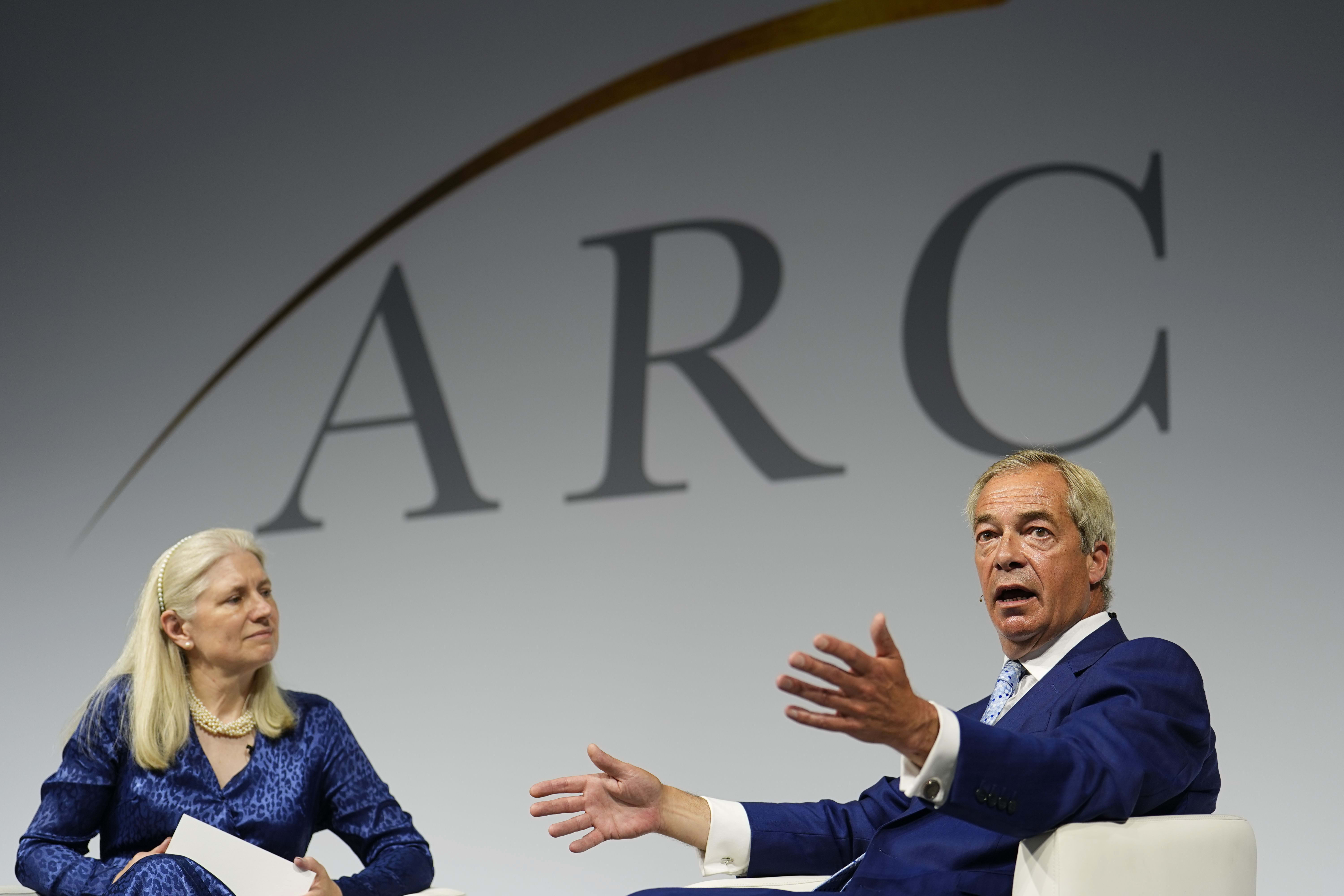
We were in sweltering London last week, with a Canadian contingent of colleagues and friends of Without Diminishment, NCC, the Macdonald-Laurier Institute (MLI), the Free Speech Union of Canada, and Cardus, to ruminate on these very questions, but, more importantly, to work on their solutions.
The Alliance for Responsible Citizenship (ARC), co-founded by Dr Jordan Peterson, has quickly become a kind of counter-Davos for the intellectual but not elitist, and for the heterodox by the standards of warped modernity. Flanked by partners Kate Marland and Geoff Russ, we were met by soaring convention halls (with intermittent air conditioning), an army of hundreds of volunteers, art displays and classical music, and salon-style dinners under stained glass.
No one had to say the word ‘conservative’. It was redundant—largely a given. It was also entirely unnecessary. Whether you were seated next to a sculptor, poet, astronaut, soldier, pastor, politician, musician, actor, educator, or writer, attendance was predicated on believing in civilisation and wanting to take part in its reconstruction following decades of managed decline.
For all the incongruity of being fêted with high-minded ideals and treated as members of a kind of counter-elite while being unassailably downwardly mobile in an era of replacement, declining birth rates, and the soaring social costs of ‘GDP barely inches up’ politics, it was an honour to have been invited as guest delegates and to have been joined by thousands viewed as men and women ‘in the arena’.
It is in that arena—civil society, the court of public opinion, and the Overton windows we seek to expand and replace with stained glass, giving life, beauty, and the permission structure for the anything-but-ordinary citizen to join in saying and doing what is true, and no longer to live by lies—that we and the others in attendance understand that the key to that work lies in being radical but not extreme. We have enough darkness; enough Machiavellian climbers and borderline personality disorder (BPD) types; enough engagement farmers.
‘Slopulism’ may trick the heart, but it poisons the mind. It’s a spent persuasive force. It is, ultimately, a lie. And human beings, for all their fallibility, are inherently oriented towards the truth.
For civilizations now to be rebuilt, defended, and advanced, we must offer young men and women more than economic outcomes. This has been a central thesis of our work at W.D., sometimes drawing the ire of certain Harper-era success stories who would rather stick to the safety of pretending the key issues at the doors relate solely to the bad news that greets many when they open their banking apps, or that any small-c conservative rebuke of that formula is socialistic in nature. And yet, that is a straw-man excuse. There are ways to communicate being pro-growth, pro-worker, and pro-family all at the same time; ways to make your case for reconstruction and renewal that are coded for your audience and won’t scare the normies.
Because our problems run much, much deeper. We see the inherent social costs of GDP-maxxing through thoughtless, low-skilled, poorly integrated immigration. We see the perils of having torn up the social contract, offering instead a simulation of, and poor substitute for, a life. Young men are meant to be ‘boisterous and tactile’; young women are meant to be attachment-driven and nurturing. Neither group is served by broader market disloyalty, and a secondary me-first, feelings-driven attention economy, which seeks to devour one’s frontal lobe, like the tamping iron that was driven through Phineas Gage’s skull, leaving him profoundly changed.
There is, indeed, more to life; our march back through institutions and halls of power is essential, and the best preparation for a future in need of change—an inherently alienating and digital one—is an analogue, hyper-focused present. Canadian conservatism, in its present form, offers no answer to this—just a vague tapestry of free market slogans, while being too frightened to take on actual free market issues such as supply management. A column penned by A.I. slop, for which any human should feel ashamed to attach their name to, would surmise ‘those aren’t principles; they’re excuses to avoid meaningful change’.
American author and conservative columnist Ross Douthat told the audience at the soaring Olympia cultural hub: ‘Substitutes for real life are always inferior and distracting. Conditions of agency and conditionality, and the basic continuity of human existence, won’t happen under digital conditions; they’re driven by faith that human life is worth living and that we have a destiny to fulfil.’
For all the challenges of the day, this should be viewed as fundamentally good news for people of faith, whose beliefs, Douthat believes, are ‘selected for the challenges of the era’ and for the ‘evolutionary bottleneck’ of the age.
In essence—and I say this as an imperfect Anglican who often struggles to find a service not adorned with Current Thing memorabilia, nor presided over by pastors who view their pulpit as personal and not liturgical—at a time when not enough churches are houses of prayer, gatherings like ARC read as an attempt to reclaim God and first principles in the aggregate. It’s macro work that’s ultimately about the micro, about what is most meaningful: family, faith, freedom; acts of personal ownership that, when shared writ large, make up what we call a life, and that put the civil in civilization.
To move any further away from that essential relationship and those essential guardrails is, as Ayaan Hirsi Ali also shared from stage, to ‘stamp misery on ages yet unborn’.
To continue to cut ourselves loose from all restraint is not true freedom. Infinite migration; the rule of law as a suggestion rather than a rule; the devolution of expectation in the public square; mothballing symbols of meaning, the finer things, and the finer details in favour of the antiseptic and monolithic—there is no future there worth living in.
Grateful we should be, then, that we have fighters in the present: the kind who cross oceans to learn and plan, or even drive across countries in the dead of our COVID-response winters to lean on their horns, dance, provide for homeless people, shovel snowy sidewalks, and make merry while all around them is drab and grey.
An astronaut without a tether can only tumble hopelessly into the full dark. To believe in—to work in, and on—that which is Good, True, and Beautiful, is the only solution to that endless, aimless spiral.
Leaving ARC and leaving London—which is far less depressing than posts from Visegrád 24 would have you believe—I was struck by an assembly of thousands who were left with the assignment to give back and not take: an assignment antithetical to the anti-civilizational homework one would normally associate with opulent European conferences that seek to influence the politics and culture of the day.
The bad news: events like ARC and publications like this have to exist in the first place. But here’s the good news: we have our fighters. We’re not alone in knowing this isn’t good enough. If you’re here, chances are you were never any good at living by lies, either.
And if you’re here, chances are you understand that to return to the ‘politics of normalcy’, first, there are battles to win; battles that were lost, for decades, on ground ceded to, then fortified by, those with a vested interest in anything but normal.
To care only about the pocketbook, to pretend the 2015 playbook still works, when it lost to begin with, is a luxury most of us can no longer afford to believe in.
We tend to live in the spaces those unaffected travel through. Our parks, festooned with fentanyl-made schizophrenics, the shoebox apartments where we struggle to convert the energy from our hamster wheels into professional and personal inertia, they are but specks through a passing windshield for the ‘my politics are leave me alone’ jet-set.
I challenge anyone to fully engage with Zohran Mamdani’s embittered, resentful, Third-Worldist July 4th remarks, and to come away with anything but the understanding the wolf is at the door, and will not leave willingly. And why won’t it leave willingly? Because nature abhors a vacuum. Mamdani was created by the Big Sleep, our ‘culture war’ slumber, where too many played nice with that which is inherently anti-Western Civilizational, to squeak out lesser governments, and to cling to pieces of what once was, in the hopes that this was all just a fad. It wasn’t. It isn’t.
Transgression is here, whether we like it or not—born of bad leaders, non-participants, failed liberals and conservatives alike. This time, surely, it’s better to fight. This time, surely, it’s better to win.
Only then can we embrace, fully, a return to the ‘politics of normalcy’—with trench lines dug and sentries placed in high towers, having learned, hopefully, that all wins are temporary; even our civilization, if we’re again so careless.
Alexander Brown is the writer and editor of Acceptable Views, co-founder and Managing Editor of Without Diminishment, Director of the National Citizens Coalition, a contributor to Project Ontario, and a former host on Juno News.
His writing has appeared in publications such as The Hub and the Toronto Sun, and he has been a speaker on stage at two Canada Strong and Free Networking Conferences.
Subscribe for free or paid to Without Diminishment Editor:

A another superb analysis of the current worrisome situation Alex. Great to hear about ARC and the recent gathering of intelligent beings in London.
The growing influence of outright communists within the U.S. D party is particularly frightening. As they gain traction in this important political year, even the party's incumbent lefties are concerned for their survival, let alone relevance.
Your description of the "Big Sleep" reminds me of the Boiling Frog apologue. Often a significant threat isn't recognized until it is too late. North America's educational system has seemingly conditioned many recent generations with the theory that socialism is good and that mercantilism is bad. For those seeking more aggressive action, socialism is too slow. Communism is the solution. Enter the latest mayor of Gotham and those of his ilk. If the rising red tide is to be contained, and eventually drained, the grassroot teachings that are currently poisoning society will have to be eliminated. That will take courage and time. Western Civilization will need fighters.
See you at "P&P".
Couldn't love or agree with this article more. An awesome read!